A travel agency website in 2026 competes directly with Expedia, Booking.com, and Google Flights for the same traveler's attention. You won't win on breadth — you win on expertise, curation, and trust. The most successful independent travel agency websites don't try to be everything to everyone. They serve a specific traveler type, showcase deep destination knowledge, and make it effortless to start a consultation. This guide covers how to build a travel agency website that converts browsers into booking clients.
What Makes Independent Travel Agencies Competitive Online
Independent travel agencies thrive online when they own a niche:
- Specialization: 'Luxury African safari specialist,' 'European river cruise expert,' 'Disney vacation planner.' Travelers searching for specialized expertise can't find what you offer on Expedia. Niche agencies convert website visitors into consultations at dramatically higher rates than generalist agencies.
- Content authority: Destination guides, trip reports, and packing lists written by someone who has actually been there build trust that algorithmic booking sites can never replicate.
- Relationships: Access to preferred supplier rates, exclusive amenities, and itinerary customization that travelers can't get through online booking portals — communicated clearly on your website.
- Personal service: 24/7 support during travel disruptions, advocacy with hotels and airlines, and someone who knows the client's history and preferences. These aren't website features — they're arguments your website must make for you.
If your website looks like a generic booking portal, travelers will use a real booking portal. Your competitive advantage is expertise and service — your website must communicate both instantly.
Step 1: Choose the Right Platform for a Travel Agency Website
Travel agency websites need to showcase destinations visually, handle consultation booking, and potentially integrate with booking engines or GDS systems:
- ZonedWeb (recommended): Deploys a professional travel agency website from a curated template catalog via ZonedWeb's travel website builder. Built on real WordPress with WooCommerce for selling tour packages directly. Zoni AI drafts your destination and service page content. Supports booking plugin integration and rich destination galleries.
- WordPress + travel theme: Most flexible option. Popular themes: Travelify, Travel Agency Pro, or Divi with travel templates. Pair with WooCommerce for tour package sales and Gravity Forms for consultation requests.
- TripSuite / Travefy: Travel-agency-specific CRM and website platforms. $50–150/month. Built-in itinerary builders and client portals. Better for agencies that already have an established client base and want to streamline operations.
- Simpleview / CivicPlus: Destination management organization (DMO) platforms. Not relevant for independent agencies.
- Squarespace: Clean, photo-forward templates that work for destination content. $23–65/month. Limited booking integration depth compared to WordPress.
For most independent travel agencies, especially specialists and luxury advisors: WordPress delivers the best combination of visual content presentation, SEO control, and booking flexibility without SaaS lock-in.
Step 2: Build the Essential Travel Agency Pages
A travel agency website must inspire and inform simultaneously. Page structure:
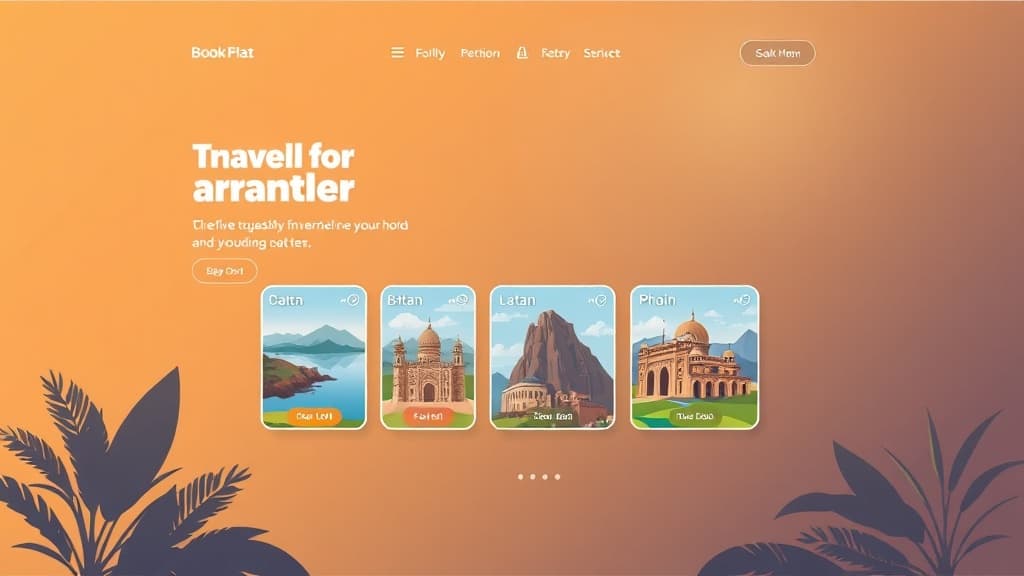
Home Page: Your niche or specialty immediately visible ('Honeymoon and Romance Travel Specialists' or 'Small-Group Adventures in Southeast Asia'). A hero image of your signature destination — full-width, evocative, color-graded for maximum impact. 'Start Planning Your Trip' CTA linked to a consultation form. Below: featured destinations, recent client trips, and a social proof section with trip testimonials.
Destinations / Experiences: One page per destination or trip type you specialize in. Format: what makes this destination unique, best time to visit, your recommended itinerary length, featured hotels or lodges you know and trust, and transportation logistics. Link each destination page to a specific inquiry form pre-populated with that destination. These pages are your primary SEO assets — they rank for '[destination] travel agent' and '[destination] vacation planner' queries.
Trip Types / Specialty Programs: Pages for your specialty categories: Honeymoons, Luxury, Adventure, Family, Group Travel, Solo Travel. Each page speaks to the specific traveler — their concerns, their priorities, and how your expertise serves them specifically. Don't write one page for 'all' travelers; write individual pages for each audience segment.
About the Agency / Meet Your Advisor: Your personal travel history, destinations you've visited (with photos), certifications (Certified Travel Counselor, Certified Travel Associate, specialist certifications from suppliers), and your agency's history. Travelers want to know who is planning their trip. Personal, first-person storytelling outperforms corporate 'about us' language in travel.
Featured Packages / Curated Trips: 4–6 specific, bookable itineraries with full details: day-by-day breakdown, included accommodations, pricing range, and departure dates. These pages convert high-intent travelers who have a trip in mind and want to see specifics. They also rank well for '[destination] itinerary' searches.
Trip Planning Process: Many travelers don't know how working with a travel agent actually works. Demystify it: 'Step 1: Free 30-minute consultation. Step 2: Custom itinerary proposal within 48 hours. Step 3: Review, revise, and book.' Address the common objection: 'Is it more expensive to use an agent?' directly (answer: usually no, and often you get better rates and included amenities).
Travel Blog / Destination Guides: Your most powerful SEO asset and trust-builder. Long-form destination guides (1,500–3,000 words) with real photos from your travels rank for '[destination] travel guide' queries and position you as an authority. A blog with 20+ destination guides is the content engine that drives qualified organic traffic at zero ongoing cost.
Client Stories / Testimonials: Detailed trip testimonials with client name, destination, and trip type. Photos from client trips (with permission) are highly compelling. 'We planned our African safari with [Agency Name] and it exceeded every expectation' with a photo of a real client at a real campsite converts better than any stock photo of a sunset.
Start Planning / Contact: A consultation booking page with a form: destination(s) of interest, travel dates, party size, budget range, and 'tell us about your dream trip.' Connect to Calendly for immediate call scheduling. Respond to every inquiry within 4 business hours — travel planning decisions happen quickly and the first agent to respond often gets the booking.
Step 3: Set Up Consultation Booking and Tour Sales
Travel agencies monetize through two primary mechanisms: consulting fees and supplier commissions. Configure both on your website:
- Calendly for consultation scheduling: Let prospects book a free 30-minute discovery call directly from your website. Sync with Google Calendar. Send automatic reminders. Remove the phone tag barrier to starting the relationship.
- WooCommerce for packaged tour sales: Sell defined, priced tour packages directly from your WordPress site. Collect deposits, process payments, and send automated booking confirmations. Ideal for group tours, yacht charters, and fixed-departure departures.
- Gravity Forms consultation request: For custom itinerary requests, a detailed form that captures destination, dates, party size, and budget qualifies the lead before your first conversation and makes your initial consultation more productive.
- TERN or Travefy itinerary tool integration: If you use a travel tech platform to build itineraries, integrate client-facing itinerary viewing directly into your website for existing clients.
Step 4: Travel Agency SEO Strategy
Travel SEO is competitive, but specialists win against generalists and OTAs in their niche:
- Destination + specialty keyword pages: 'Luxury Tanzania Safari Specialist,' 'Italy Honeymoon Travel Planner,' 'Disney Cruise Travel Agent [City].' These long-tail queries have high commercial intent and modest competition compared to 'travel agent.'
- Destination guides: 1,500–3,000 word guides for each destination you specialize in. Include real photos, specific hotel recommendations, and seasonal advice. These rank organically and establish authority.
- Google Business Profile: Travel agencies show up in local 'travel agent near me' searches. Complete your profile, add photos of your travels, and collect Google reviews from satisfied clients.
- Consortium and host agency SEO benefit: If you're affiliated with a host agency (Virtuoso, TRAVELSAVERS, Signature Travel Network), mention these affiliations clearly. They signal credibility and are known quality indicators to luxury travelers.
Browse our travel agency website templates — destination-forward layouts with gallery sections, itinerary displays, and consultation booking integration. Built to inspire and convert simultaneously.
Ready to build your travel agency website? ZonedWeb's travel website builder deploys a professional, image-rich WordPress site from travel templates with Zoni AI drafting your destination and service content. Start planning your website today.
Frequently Asked Questions
How do travel agents make money if everything is on the internet?
Travel agents earn supplier commissions (typically 10–15% of booking value from hotels, cruise lines, and tour operators), planning fees charged to clients for complex itineraries ($100–500 per trip), and preferred supplier incentives not available through public booking sites. A travel agent who plans a $15,000 African safari earns $1,500–2,250 in commission — for the same total price the traveler would pay on a public site, but with personalized service and local expertise the site can't provide.
Do I need an online booking engine on my travel agency website?
Not necessarily. Most independent travel advisors operate consultatively — a client contacts them, they design an itinerary, and book through their host agency's GDS or supplier extranets. A booking engine (like Tourism Tiger or Rezdy) makes sense for agencies selling defined, fixed-price tour packages that can be booked without customization. For custom itinerary specialists, a consultation form + Calendly is more appropriate than an online booking engine.
Should I charge a planning fee as a travel agent?
Increasingly, yes. Planning fees (typically $100–500 for complex itineraries) do two things: they prequalify serious clients from tire-kickers, and they ensure you're compensated for time spent even if the client books nothing. Many luxury and specialist advisors charge planning fees and find that the quality of their client relationships improves because committed clients take the planning process seriously. Communicate your fee policy clearly on your website's 'How We Work' page.
How do I compete with Expedia and Booking.com?
Don't compete where they're strongest — breadth and price comparison. Compete where they're weakest: expertise, customization, advocacy, and relationships. An OTA can't call the hotel manager at your regular lodge in Tanzania and arrange a private bush dinner for your clients' anniversary. An OTA can't monitor your clients' flights and rebook them automatically when connections get tight. Specialize, build deep supplier relationships, and communicate what you do that no algorithm can replicate.
What certifications should a travel agent have?
Key certifications to display prominently on your website: Certified Travel Counselor (CTC) from The Travel Institute — the industry's premier general certification. Destination-specific specialist certifications from tourism boards (Italy Expert, South Africa Specialist, Disney College of Knowledge). Cruise Line International Association (CLIA) memberships and certifications. Host agency affiliation (Virtuoso, TRAVELSAVERS, Signature). These credentials are particularly important for luxury advisors where clients are spending $5,000–50,000 on a single trip.
Zoned Web
The ZonedWeb team builds the AI website platform that designs, writes, and deploys professional, SEO-ready sites — so you can launch in minutes, not weeks.