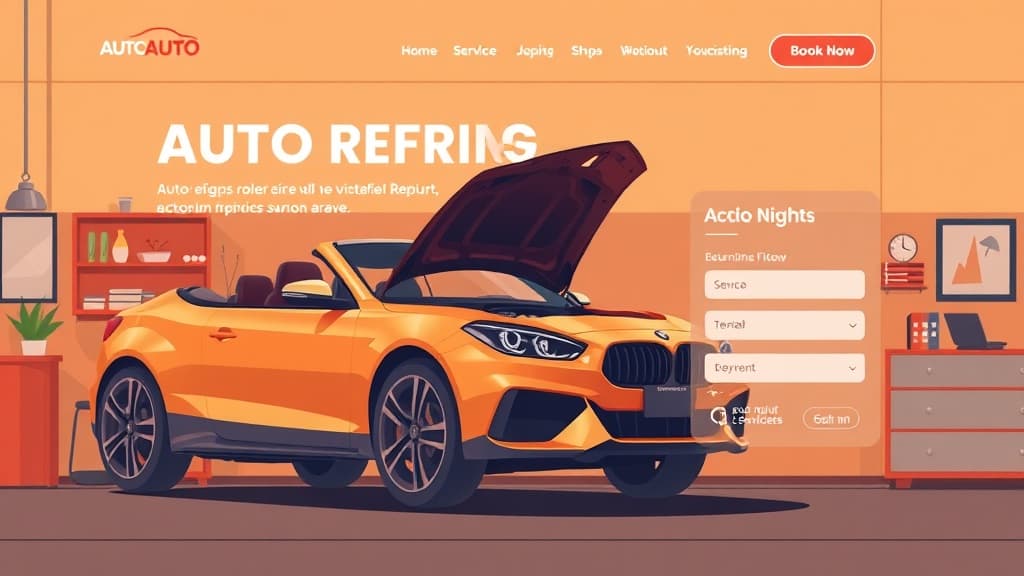
Automotive businesses run on trust and local reputation — and in 2026, that reputation is built online before a customer ever walks through your door. Whether you operate a dealership, auto repair shop, detailing business, or collision center, your website is the first place customers evaluate you against every competitor in your market. This guide covers how to make an automotive website that generates service appointments, showcases your inventory or expertise, and builds the local trust that turns a search into a customer.
What Automotive Customers Look for Online
Automotive website visitors have distinct intent depending on their situation:
- Emergency repair customers need phone number and hours immediately — their car broke down right now. These visitors leave within 5 seconds if the phone number isn't immediately visible.
- Maintenance customers are comparing shops. They'll check your reviews, pricing transparency, and how easy it is to book an appointment.
- Vehicle shoppers want inventory, photos, pricing, and financing details — without having to call a salesperson to get basic information.
- Specialty customers (detailing, custom mods, restoration) are evaluating your portfolio and expertise. Your previous work is your primary sales tool.
- Insurance work / collision customers are stressed and need clear, reassuring information about the repair process, estimated timelines, and whether you work with their insurer.
Your website needs to serve all these intent types clearly, or different segments of your potential business will bounce to competitors.
Step 1: Choose the Right Platform for an Automotive Website
Platform requirements vary by automotive business type:
- ZonedWeb (recommended for repair shops, detailers, and service businesses): Deploys a professional automotive website from a curated template catalog via ZonedWeb's automotive website builder. Built on real WordPress with WooCommerce, enabling online service booking, parts sales, and gift cards. Zoni AI generates your initial service descriptions and about page content.
- WordPress + automotive theme: Strong choice for repair shops and service businesses. Popular themes: Moza, AutoZone, or the free Astra with a custom page builder. Pair with Bookly for service appointment scheduling.
- Dealer.com / CarNow: Enterprise dealer website platforms with VINLink inventory management and deep CRM integration. $1,500–5,000/month. Only appropriate for franchised dealerships with 50+ unit/month sales volume.
- Carsforsale.com / AutoTrader integration: Listing-focused platforms for used car dealers. Limited website customization but massive inventory distribution. Works as a supplement to your primary website, not a replacement.
For repair shops, detailers, and service-focused automotive businesses: WordPress-based platforms deliver the best balance of professional presentation and online booking capability without SaaS platform lock-in.
Step 2: Build the Essential Automotive Website Pages
The right page structure depends on your automotive business type, but most share these core pages:
Home Page: Business name, city/area served, and primary services visible above the fold. Phone number prominently displayed — click-to-call on mobile. For repair shops: 'Schedule Service' CTA. For dealers: 'Browse Inventory' CTA. Customer reviews visible without scrolling. Emergency services (towing, roadside) highlighted prominently if applicable.
Services Page: Every service you offer with brief descriptions. Include pricing wherever possible — transparency here is a significant competitive advantage in an industry where pricing opacity is common. Oil change specials, tire packages, and brake inspection promotions belong here. Link each service to a detailed subpage targeting that service's specific keyword ('brake repair [city],' 'wheel alignment [city]').
Appointment Booking: Online scheduling is increasingly expected by automotive customers — especially under 40. Offer: service type selection, vehicle year/make/model input, date/time picker, and contact info. Send automated confirmation and reminder texts. Shops with online booking fill more appointment slots and see fewer no-shows than phone-only scheduling.
About Us / Our Shop: Your history, certifications (ASE, AAA approved, manufacturer-certified), and your technician team. People trust mechanics they feel they know. A 200-word story about how your shop started and what you stand for differentiates you from chains. Show your ASE certifications prominently — customers specifically search for ASE-certified shops.
Portfolio / Gallery (for detailing, customization, restoration): Before-and-after photos organized by service type. This is your primary conversion tool. Sort by: ceramic coating, paint correction, full detail, vinyl wrap, etc. Organized, labeled galleries with 'Book This Service' CTAs outperform disorganized photo dumps.
Inventory (for dealers and used car lots): VIN-based inventory with photos (minimum 15–20 per vehicle), price, mileage, key features, and financing CTA. Inventory must update automatically from your DMS. Manually updated inventory pages go stale and damage credibility.
Reviews / Testimonials: Aggregate your Google and Yelp reviews or embed them directly. Auto repair specifically has a high distrust factor — independent social proof (real reviews from real customers) is the most powerful conversion element on the page.
Contact / Location: Address with Google Maps embed, phone, hours (including holiday hours around major holidays), and towing info if applicable. Many repair customers call ahead to ask if you have loaners or shuttle service — answer these questions on the page.
Step 3: Set Up Online Service Scheduling
Online scheduling is the highest-ROI feature for repair shops and service businesses. Implementation options:
- Bookly (WordPress, $89/year): Handles multi-service, multi-technician scheduling. Automated SMS and email reminders. Customers enter vehicle info in custom fields. Best for independent shops with 2–5 service bays.
- Calendly + WooCommerce: Calendly handles scheduling; WooCommerce handles deposits for pre-paid services. Straightforward setup for shops new to online booking.
- Shop management software integration: If you use Mitchell1, AllData, or Tekmetric for shop management, check their online scheduling integrations. Syncing directly into your work order system eliminates double-entry.
- RepairLink / MyShopManager: Automotive-specific CRM and marketing platforms with integrated booking. $200–400/month. Worthwhile for shops doing $50,000+/month in revenue who want automated follow-up and review management.
Step 4: Dominate Local Automotive SEO
Local automotive SEO is highly competitive — national chains (Jiffy Lube, Midas, Firestone) compete for the same keywords. How independent shops win:
- Hyper-local pages: Individual service pages optimized for your specific city and neighborhood: 'Oil Change in [City],' 'Brake Repair [Neighborhood].' Chains optimize nationally; independents win locally.
- Google Business Profile: Post weekly specials, add photos of completed work, and respond to every review. Shops with active GBPs with 100+ reviews dominate the local pack for 'auto repair near me.'
- Google reviews: The most impactful SEO investment in automotive. Send automated review request texts via RepairLink, Podium, or Birdeye after every completed service. 100+ reviews with 4.5+ average is the threshold for local pack dominance.
- Vehicle-specific content: Blog posts targeting: 'How to know when you need new brakes,' '[Car model] common problems,' 'Best oil change interval for [car model].' These rank for specific searches and position you as the expert, not just a commodity.
- Schema markup: Add AutoRepair (or Dealership) business schema with your services, certifications, and accepted payment methods.
Browse our automotive website templates — professional layouts for repair shops, dealerships, detailers, and specialty automotive businesses. Fast, mobile-optimized, and built for appointment conversion.
Ready to build your automotive website? ZonedWeb's automotive website builder deploys a professional WordPress site from automotive templates with Zoni AI writing your initial content. Read our guide on building a small business website for the broader digital foundation strategy. Start free today.
Frequently Asked Questions
What should an auto repair shop website include?
At minimum: phone number visible on every page (click-to-call on mobile), services list with pricing transparency, online booking, customer reviews, certifications (ASE, AAA Approved), business hours with holiday closure information, Google Maps embed, and a clear 'about us' that builds trust. Secondary: vehicle maintenance tips blog, warranty information, and fleet service information if you serve commercial clients.
How do I get my auto shop to rank first on Google?
Local pack ranking (the Google Maps 3-pack) is the most valuable position for local auto shops. The three ranking factors are proximity, relevance, and prominence. You can't control proximity. Relevance comes from completing your Google Business Profile with every service you offer. Prominence comes primarily from Google review quantity and recency. A shop with 150 Google reviews ranks above a shop with 20 reviews, almost universally. Implement automated review requests after every completed service.
Should an auto dealer use a custom website or a dealer platform?
Franchised dealers (Ford, Toyota, Honda, etc.) are typically required to use manufacturer-approved website platforms (Dealer.com, Dealer Inspire, or similar). For independent used car dealers: a WordPress-based site with VIN inventory integration (v12 Software, TRADER, or AutoManager) gives you full control at a fraction of enterprise platform cost. For dealers selling under 25 vehicles/month, ZonedWeb + WooCommerce with a manual inventory page is a viable starting point.
Do I need a blog on my automotive website?
Yes, if SEO matters to you. Automotive blogs are one of the highest-ROI content investments available to independent shops. 'How often should I change my oil in [your climate]?' 'Warning signs your brakes need replacing' — these articles rank for specific queries your potential customers are searching, and they build trust before the customer ever walks in. Aim for one 800–1,200 word post per month targeting a common maintenance question.
How important are Google reviews for an automotive business?
Critical. Auto repair has historically low consumer trust — reviews are the primary mechanism that converts skeptical search visitors into booked appointments. Shops with 100+ reviews at 4.5+ stars consistently report 30–50% more phone calls than comparable shops with fewer reviews. Implement an automated review request system (text message sent 24 hours after pickup) and make it frictionless — one tap, review screen, submit. This single system generates more business than most marketing campaigns.
Zoned Web
The ZonedWeb team builds the AI website platform that designs, writes, and deploys professional, SEO-ready sites — so you can launch in minutes, not weeks.